

Remote work has shifted from a temporary solution to a long-term structure. For dual-income households working from home, design matters more than ever. Two professionals sharing one space must balance focus, comfort, and privacy. Without thoughtful planning, distractions multiply. Video calls overlap. Noise travels. Work spills into personal areas. Designing a home that supports two careers requires intentional layout, acoustic control, and functional separation. The goal is not just productivity. It is sustainability.
Defining Separate Work Zones
The priority is physical separation. Even in small homes, distinct zones reduce friction. Each person should have a dedicated workspace rather than sharing a single desk. Ideally, these areas are in different rooms. When that is not possible, use dividers or shelving to create boundaries. Visual separation supports mental focus. Dedicated work zones help ensure that both partners can maintain autonomy during the day. Clear territory reduces interruptions and fosters accountability.
Managing Noise and Acoustics
Noise becomes a primary challenge in dual remote setups. Video meetings, phone calls, and keyboard typing can interfere with concentration. Acoustic panels, rugs, and curtains absorb sound. Solid-core doors reduce transmission between rooms. White noise machines can mask background disruptions. Consider microphone quality as well. Noise-canceling headsets protect a professional image during meetings. Addressing acoustics early prevents daily frustration. Silence supports performance and reduces stress.
Balancing Collaboration and Privacy
Even when both partners work independently, collaboration may occur. Shared break areas provide an opportunity for connection without intruding on focused time. Design a neutral space, such as a kitchen table or lounge area, for informal conversation. Keep workstations private and personal. This separation helps ensure that professional boundaries remain intact. It also protects the relationship balance. Work and personal life should coexist, not merge completely.
Considering Storage and Visual Organization
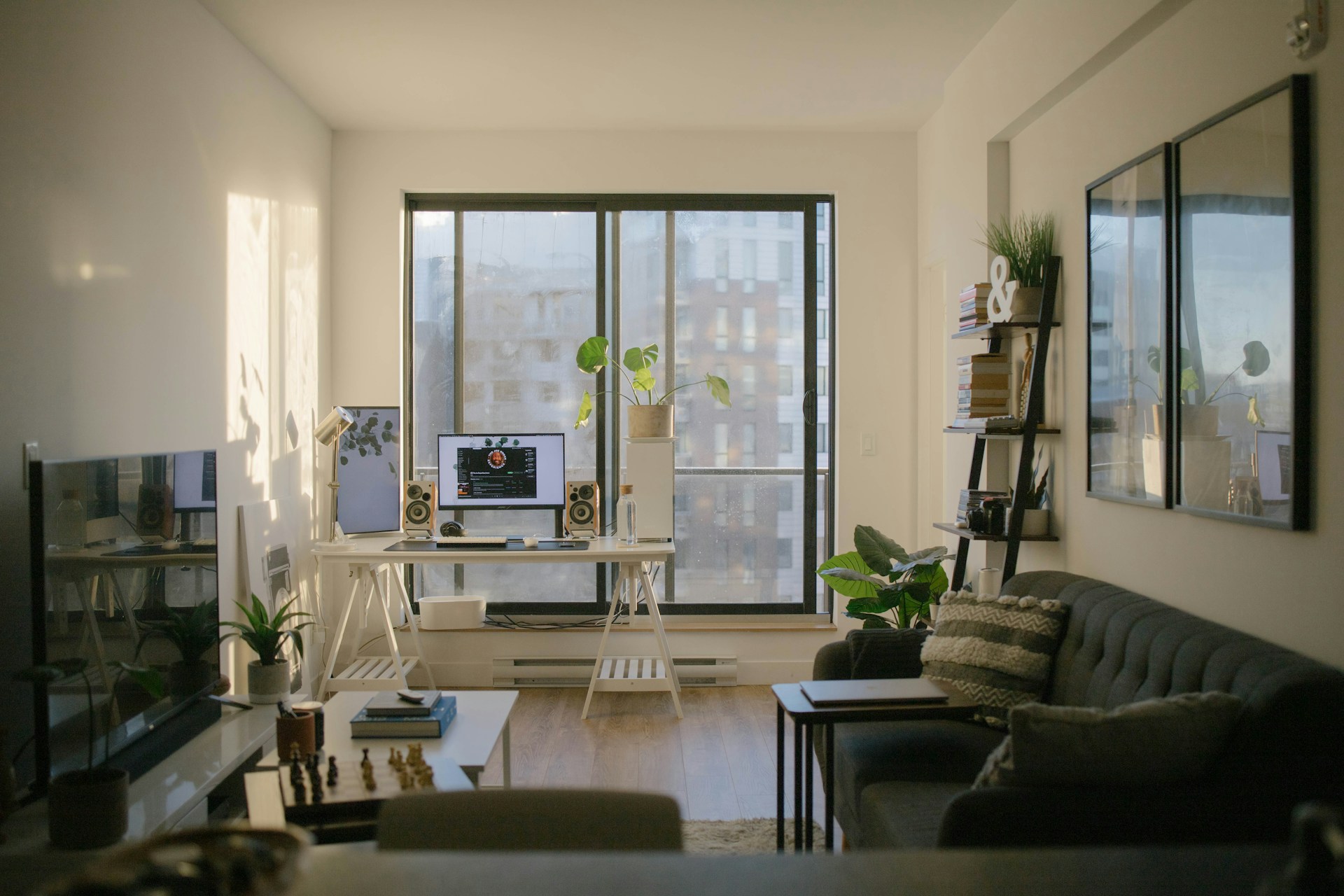
Clutter undermines productivity. Dual setups double the equipment, paperwork, and cables. Smart storage becomes essential. Use vertical shelving to maximize wall space. Closed cabinets hide distractions. Cable management systems keep surfaces clean. Label storage zones clearly. When items have designated places, routines remain smooth. Organization reduces cognitive load. Clear surfaces support clearer thinking.
Designing for Comfort and Ergonomics
Working from home means prolonged hours at desks. Ergonomic design protects health and productivity. Adjustable chairs, supportive desks, and proper monitor height reduce strain. Lighting also plays a role. Natural light improves mood and alertness. Position desks near windows when possible, but avoid glare on screens. Invest in reliable internet infrastructure. Dual-income households depend heavily on bandwidth. Upgraded routers and wired connections help ensure stable performance. Comfort supports consistency. Small ergonomic improvements make long workdays more manageable.
Protecting Work-Life Boundaries
One risk of remote work is constant availability. When both partners work from home, boundaries blur further. Design can reinforce limits. Close office doors at the end of the day. Use lighting changes to signal a transition from work to personal time. Avoid placing desks in bedrooms if possible. Separate spaces help ensure rest areas remain restful. Establish shared routines. Begin and end work hours intentionally. This supports mental separation and protects long-term well-being.
Designing homes for dual-income remote workers requires thoughtful zoning, acoustic control, ergonomic investment, and intentional boundaries. By creating separate workspaces, managing noise, maintaining organization, and protecting personal time, couples can build environments that support both productivity and relationship health. Remote work is no longer temporary. Strategic design ensures that shared homes function efficiently and sustainably for two professionals.